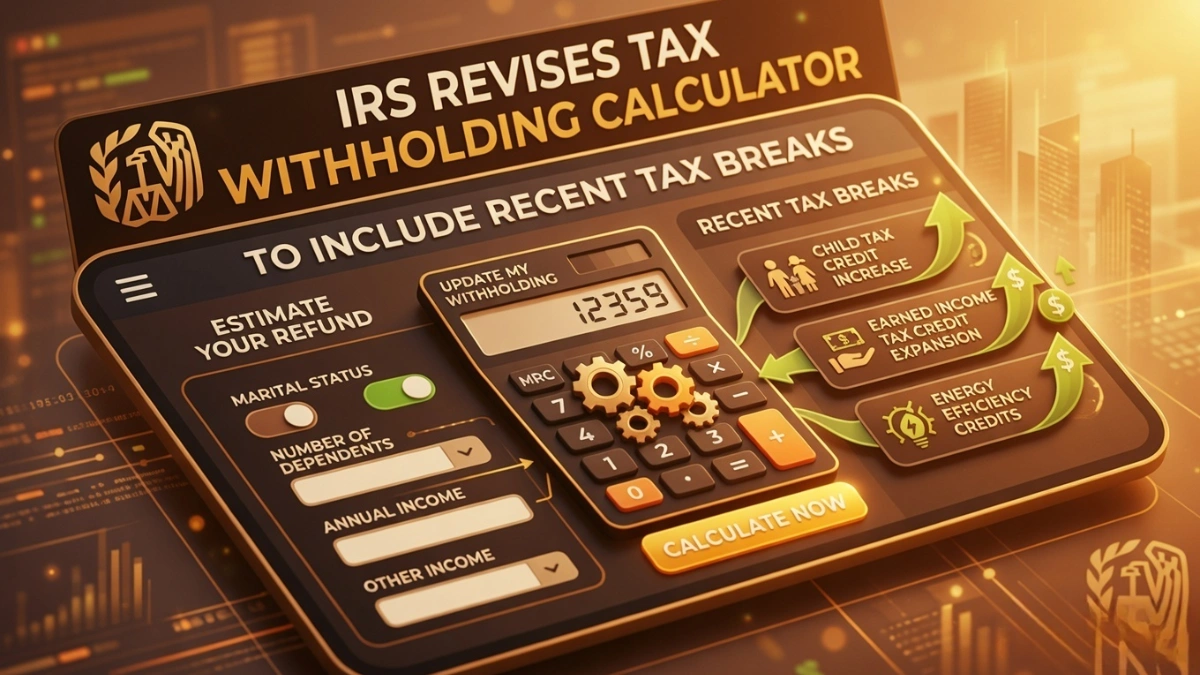
A major update from the Internal Revenue Service is grabbing attention in 2026 as the agency revises its tax withholding calculator to include recent tax breaks. This change may seem technical at first, but it has a direct impact on how much money you take home every month and how much you owe or get refunded at the end of the year. For millions of taxpayers, this update could mean more accurate tax deductions, higher monthly income, or even avoiding unexpected tax bills. However, many people are still unaware of how this new calculator works and why it is so important right now.
What Is the IRS Withholding Calculator Update
The IRS withholding calculator is a tool designed to help taxpayers determine the correct amount of federal income tax that should be withheld from their paychecks. With the 2026 update, the calculator now reflects the latest tax breaks, updated deductions, and revised credit structures. This means the tool is now more aligned with current tax laws and provides more precise estimates than previous versions. It allows taxpayers to make better decisions about how much tax should be deducted throughout the year.
Why the IRS Updated the Calculator
The update comes as a response to recent tax relief measures introduced to ease financial pressure on households. These measures include adjustments to tax brackets, increased standard deductions, and expanded eligibility for certain credits.
Because of these changes, many taxpayers were either overpaying or underpaying their taxes. The revised calculator helps correct this imbalance by providing updated calculations based on the latest rules. This ensures that taxpayers can better manage their finances and avoid surprises during tax season.
How This Update Affects Your Take-Home Pay
One of the biggest impacts of the updated calculator is on your monthly salary. If you have been overpaying taxes, the new tool may suggest reducing your withholding, which increases your take-home income. On the other hand, if you have been underpaying, it may recommend increasing withholding to avoid penalties or a large tax bill later. This makes the calculator a powerful tool for financial planning, especially in a year with significant tax changes.
Who Should Use the Updated Calculator
The IRS strongly recommends that certain groups review their withholding using the updated tool. This includes employees with multiple jobs, individuals with side income, and families claiming tax credits. People who have experienced life changes such as marriage, divorce, or the birth of a child should also use the calculator to ensure their withholding is accurate. Even if your situation has not changed, the updated tax rules make it worthwhile to recheck your withholding.
Key Features of the Revised Calculator
- Incorporates recent tax breaks and updated tax brackets
- Provides more accurate refund and tax due estimates
- Supports multiple income sources and complex scenarios
- Simplifies the process with a user-friendly interface
- Helps align withholding with actual tax liability
These features make the updated calculator more effective and reliable.
Comparison of Old vs New Calculator
| Feature | Old Calculator | Updated 2026 Version |
|---|---|---|
| Tax Law Integration | Based on older rules | Includes latest tax breaks |
| Accuracy | Moderate | High precision |
| Multi-Income Support | Limited | Advanced support |
| User Experience | More complex | Simplified and faster |
| Refund Estimates | Less reliable | More accurate |
This comparison highlights the improvements introduced in the latest version.
How to Use the Updated Calculator Effectively
To get the most accurate results, gather all necessary financial information before using the tool. This includes your latest pay stubs, details of additional income, and information about deductions and credits. Enter your data carefully and review the results provided by the calculator. Based on the recommendations, you may need to update your Form W-4 with your employer. Making these adjustments ensures that your paycheck reflects the correct withholding amount.
Common Mistakes to Avoid
One of the most common mistakes is entering incomplete or outdated information. This can lead to incorrect estimates and poor financial decisions. Another issue is ignoring additional income sources such as freelance work or investments, which can significantly affect your tax liability. Failing to update your W-4 after using the calculator is another mistake that can prevent you from benefiting from the new calculations.
Why This Update Is Important in 2026
This update is particularly important because of the changing economic landscape and evolving tax policies. With inflation affecting everyday expenses, having accurate withholding can make a noticeable difference in your monthly budget.
The IRS is encouraging taxpayers to act early rather than waiting until tax season. Adjusting your withholding now can help you avoid financial stress later. This update also reflects a broader effort to improve transparency and accuracy in the tax system.
Conclusion
The IRS revision of the tax withholding calculator in 2026 is a significant update that could impact millions of taxpayers. By incorporating recent tax breaks and improving accuracy, the new tool helps individuals better manage their finances and avoid surprises. If you have not reviewed your withholding recently, now is the time to do so. Taking a few minutes to use the updated calculator can lead to better financial outcomes throughout the year.
Disclaimer: This article is for informational purposes only and does not constitute official IRS advice. Always verify details through official sources.