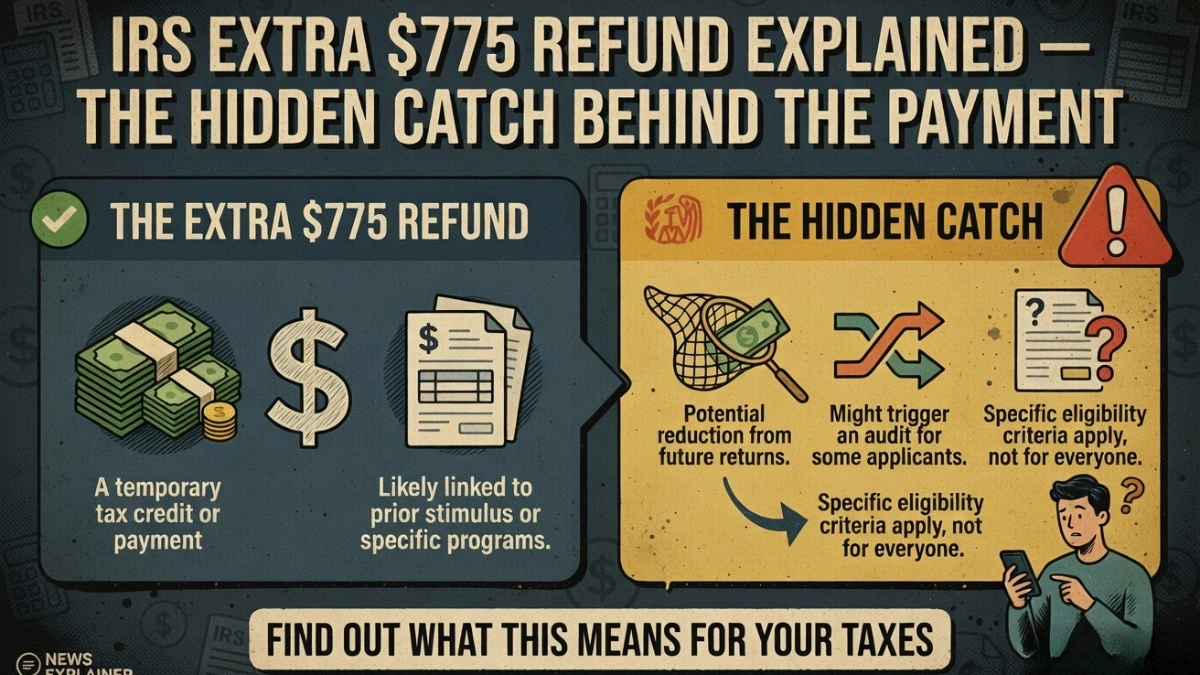
The buzz around an extra $775 IRS refund has caught the attention of taxpayers across the United States. Many are excited about the possibility of receiving additional money this tax season, but there is a hidden catch that could change expectations for millions of people. Before assuming this payment is guaranteed, it is important to understand what this refund actually represents, who qualifies, and why not everyone will receive the full amount. Here is a complete breakdown of the IRS $775 refund update and what it means for you.
What Is the IRS $775 Extra Refund?
The so-called $775 refund is not a universal bonus issued by the IRS. Instead, it is an estimated additional refund amount that some taxpayers may receive due to recent tax adjustments, credits, or corrections in withholding. This figure is often based on average refund increases seen in certain categories, such as updated tax credits, changes in deductions, or revised income calculations. It does not apply equally to all taxpayers. For many individuals, this refund may come as part of their regular tax return rather than a separate payment.
Why This Refund Is Trending in 2026
The $775 refund has gone viral due to growing financial pressure and increased awareness of tax relief measures. Many taxpayers are looking for ways to maximize their refunds, and this figure has sparked curiosity.
However, misinformation is also spreading rapidly. Some believe it is a fixed payment that everyone will receive, which is not accurate. The reality is that the amount depends on individual tax situations and eligibility criteria.
Who Is Eligible for the Extra Refund
Eligibility for this additional refund depends on several factors related to your financial profile and tax filing details. Taxpayers who qualify for certain credits, such as child-related benefits or earned income adjustments, may see an increase in their refund amount. Individuals who have overpaid taxes during the year may also benefit. Your income level, filing status, and deductions all play a role in determining whether you receive this extra amount.
The Hidden Catch Behind the $775 Refund
While the idea of an extra $775 sounds appealing, there are important conditions that many people overlook. First, this amount is not guaranteed. It represents a possible increase based on specific scenarios rather than a fixed payout. Second, the final refund can be reduced if you have outstanding debts, unpaid taxes, or prior advance payments that need to be adjusted. Third, errors in your tax return or incomplete information can delay or lower your refund. Understanding these limitations is crucial to avoid unrealistic expectations.
How the IRS Calculates Your Refund
Your refund is calculated based on the difference between the taxes you have paid throughout the year and your actual tax liability. If you have paid more than required, you receive a refund. If you have paid less, you may owe additional taxes.
Credits and deductions can significantly affect this calculation, increasing your refund or reducing your tax liability. The $775 figure often comes into play when these adjustments result in a higher-than-usual refund.
Key Factors That Affect Your Refund Amount
- Total income and tax bracket determine base tax liability
- Tax credits such as child or earned income credits increase refunds
- Filing status influences calculation outcomes
- Deductions reduce taxable income
- Previous payments and withholdings impact final refund
These factors work together to determine whether you will see an increase in your refund.
Comparison of Refund Scenarios
| Scenario | Expected Outcome |
|---|---|
| High withholding with credits | Higher refund possible |
| Low withholding | Smaller refund or tax due |
| Errors in tax return | Delayed or reduced refund |
| Outstanding debts | Refund may be adjusted |
| Multiple income sources | Complex calculation affecting amount |
This table highlights how different situations can influence your final refund.
Common Misunderstandings About the $775 Refund
One of the biggest misconceptions is that this refund is a separate payment issued by the IRS. In reality, it is part of your overall tax return. Another misunderstanding is that everyone qualifies for the same amount. Each taxpayer’s situation is unique, and the refund varies accordingly.
Some people also believe that filing early guarantees a higher refund, which is not necessarily true. Accuracy and eligibility matter more than timing.
What You Should Do to Maximize Your Refund
To increase your chances of receiving a higher refund, ensure that your tax return is accurate and complete. Double-check your income details, deductions, and credits. Using updated tax tools and reviewing your withholding can also help optimize your refund. If your financial situation has changed, make sure to include all relevant information to avoid missing out on potential benefits.
Why This Update Matters Right Now
The IRS $775 refund update is important because it highlights how tax changes can impact your finances. With rising living costs, even a moderate increase in your refund can provide relief. At the same time, it serves as a reminder to stay informed and avoid relying on viral claims without understanding the details. Being aware of how refunds are calculated can help you plan your finances more effectively.
Conclusion
The IRS $775 extra refund is not a guaranteed payment but a potential increase based on individual tax situations. While some taxpayers may benefit from higher refunds, others may see little or no change. Understanding the hidden catch behind this figure is essential to avoid confusion and make informed financial decisions. By filing accurately and staying updated, you can maximize your refund and avoid surprises.
Disclaimer: This article is for informational purposes only and does not represent official IRS confirmation. Always verify details through official sources.