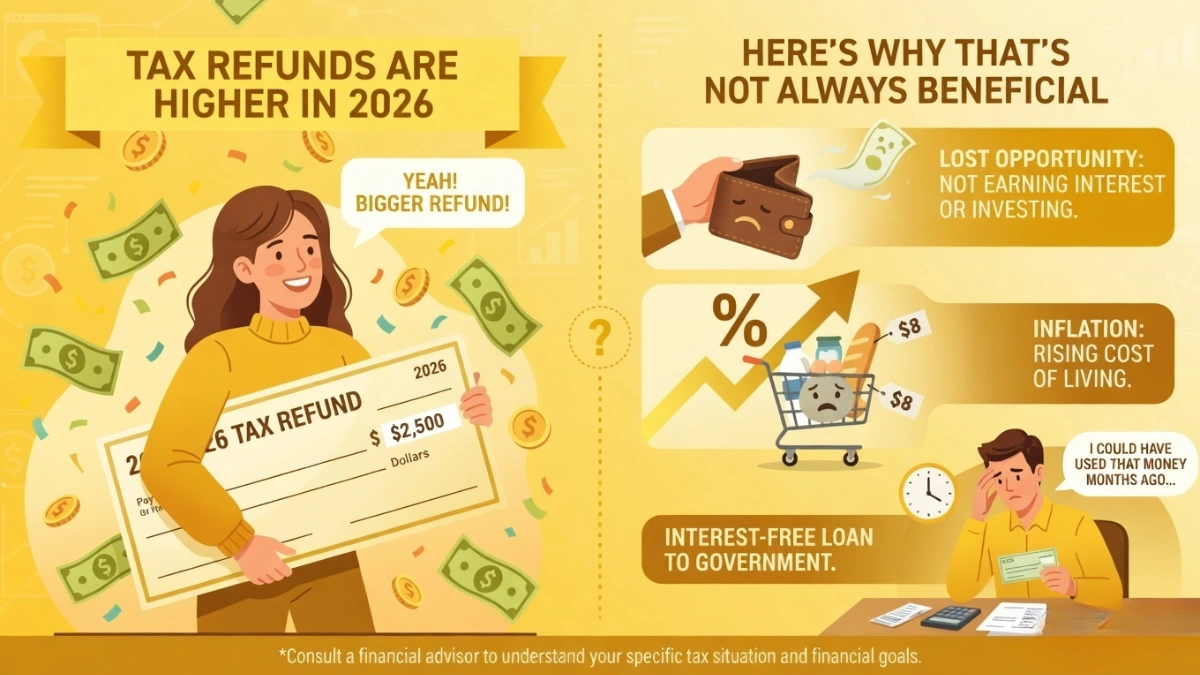
The growing buzz around higher tax refunds in 2026 has left many taxpayers excited, but there is a hidden reality that is often overlooked. While receiving a bigger refund may feel like a financial win, it does not always mean you are better off. In fact, for many people, larger refunds can signal inefficiencies in how their taxes are managed throughout the year. As economic conditions continue to evolve and tax rules shift, understanding the true meaning behind bigger refunds has become more important than ever. Before celebrating that extra money, it is worth taking a closer look at why refunds are higher in 2026 and what it really means for your financial health.
Why Tax Refunds Are Higher in 2026
Several key factors are contributing to the increase in tax refunds this year. Changes in tax brackets, adjustments in standard deductions, and updated tax credits have all played a role in reshaping how taxes are calculated. Many taxpayers are also experiencing over-withholding, where more tax is deducted from their paychecks than necessary. This often happens when individuals do not update their withholding details after changes in income, family status, or tax laws. Additionally, economic uncertainty has led some people to take a cautious approach, resulting in higher withholding amounts to avoid owing taxes later. While this strategy may provide peace of mind, it can also lead to larger refunds.
What a Bigger Tax Refund Really Means
A tax refund is simply the difference between the amount of tax you have paid during the year and the amount you actually owe. When you receive a large refund, it typically means you have paid more tax than required.
Instead of keeping that money throughout the year, you have effectively given the government an interest-free loan. The refund is just your own money being returned to you. This means that while a larger refund may feel like a bonus, it is not additional income. It is a delayed return of funds that could have been used more effectively during the year.
The Hidden Downside of Bigger Refunds
The biggest drawback of higher refunds is reduced monthly cash flow. When too much tax is withheld from your paycheck, your take-home pay decreases, leaving you with less money for everyday expenses, savings, or investments. Over time, this can limit your ability to achieve financial goals. For example, the extra money withheld could have been used to pay down debt, invest in opportunities, or build an emergency fund. Another downside is the psychological effect. Many people rely on tax refunds as a form of forced savings, but this approach does not generate interest or financial growth.
Who Is Most Affected by This Trend
Employees with steady incomes and standard withholding setups are the most likely to experience larger refunds due to over-withholding. Families claiming multiple tax credits may also see increased refunds, especially if their income fluctuates.
On the other hand, self-employed individuals and freelancers may face the opposite challenge, as they need to manage their own tax payments and avoid underpayment. Individuals who have not reviewed their withholding settings recently are at higher risk of overpaying taxes.
Comparison of Refund Scenarios
| Scenario | Outcome |
|---|---|
| High withholding | Large refund but reduced monthly income |
| Balanced withholding | Smaller refund with better cash flow |
| Low withholding | Higher monthly income but potential tax due |
| Incorrect filings | Delayed or adjusted refund |
| Changing income | Unpredictable refund results |
This table shows how different approaches to withholding can impact your financial situation.
Key Factors That Influence Refund Amounts
- Income level and tax bracket determine tax liability
- Withholding settings directly affect paycheck deductions
- Tax credits and deductions can increase refunds
- Filing status impacts overall calculations
- Additional income sources can alter final results
Understanding these factors can help you better manage your taxes and avoid unnecessary overpayments.
Why Bigger Refunds Can Be Misleading
One of the biggest misconceptions is that a larger refund means you are financially ahead. In reality, it often indicates that you have been overpaying taxes throughout the year. Many people also treat refunds as extra income, but this can lead to poor financial planning. Since the money already belonged to you, it is more beneficial to have access to it throughout the year rather than waiting for a lump sum. This misunderstanding can prevent individuals from making smarter financial decisions.
How to Optimize Your Tax Strategy in 2026
To avoid the downsides of large refunds, it is important to review your tax withholding regularly. Updating your W-4 form can help ensure that the correct amount of tax is deducted from your paycheck. Using updated tax tools and calculators can also provide a more accurate estimate of your tax liability. This allows you to balance your monthly income with your year-end refund. The goal should be to align your withholding with your actual tax obligation rather than maximizing your refund.
Why This Topic Is Trending Now
The discussion around higher refunds is gaining attention due to changing tax policies and economic conditions. As people become more aware of how taxes affect their finances, they are questioning whether larger refunds are truly beneficial. With inflation impacting everyday expenses, having access to more money during the year is becoming increasingly important. This has led to a shift in how taxpayers view refunds.
Conclusion
While higher tax refunds in 2026 may seem appealing, they are not always a positive outcome. A larger refund often indicates that you have been overpaying taxes, which reduces your monthly income and financial flexibility. Instead of focusing on the size of your refund, it is better to aim for accurate withholding that allows you to keep more of your money throughout the year. By staying informed and proactive, you can make smarter financial decisions and improve your overall financial well-being.
Disclaimer: This article is for informational purposes only and does not constitute financial advice. Always consult official sources or a tax professional.