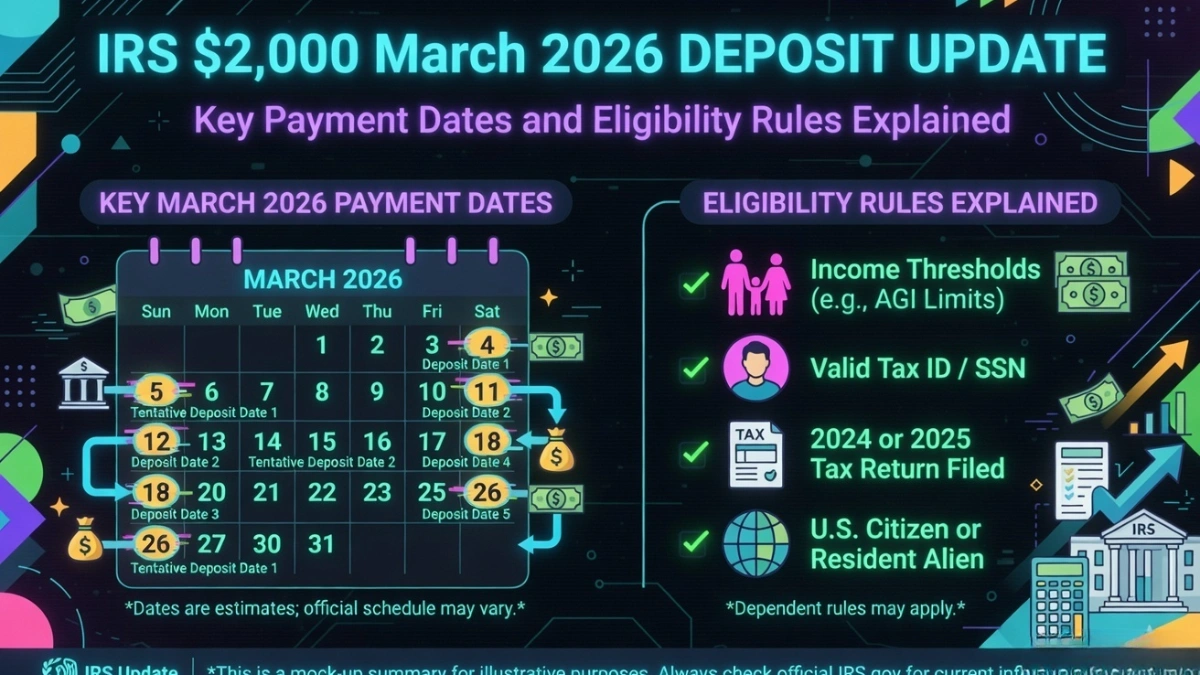
The buzz around the IRS $2,000 March 2026 deposit has created massive excitement, but also confusion among millions of taxpayers. With rumors spreading fast across social media and news platforms, people are eagerly searching for confirmed payment dates, eligibility rules, and whether they will actually receive this amount. If you are expecting this deposit, here is a clear, updated breakdown of what is really happening and what you need to know right now.
What Is the IRS $2,000 March 2026 Deposit?
The IRS $2,000 deposit being discussed is not a universal stimulus for everyone. Instead, it is linked to specific tax credits, refunds, or benefit adjustments that eligible taxpayers may receive during the 2026 tax season. For many Americans, this amount could come from tax refunds, Child Tax Credit adjustments, or other federal benefit programs. However, it is important to understand that not everyone qualifies for the full $2,000 payment.
Expected Payment Dates in March 2026
The IRS has not announced a single fixed payment date for all recipients. Instead, deposits are being processed based on tax return filings and eligibility verification. Most expected timelines suggest that payments may start arriving in mid to late March 2026, especially for those who filed their returns early and opted for direct deposit. Taxpayers who submitted their returns electronically and had no errors are likely to receive payments faster compared to those who filed paper returns.
Who Is Eligible for the $2,000 Deposit?
Eligibility depends on several key factors, and not every taxpayer will receive the full amount. The IRS evaluates income levels, filing status, and qualifying dependents before approving payments.
Here are the main eligibility criteria explained in simple terms.
- Individuals must have filed their 2025 tax return
- Income must fall within IRS-approved limits
- Families with qualifying children may receive higher benefits
- Direct deposit users typically get payments faster
- No major errors or pending verifications in tax filings
These conditions play a crucial role in determining whether you will receive the full $2,000 or a reduced amount.
Why Some People May Not Receive the Full Amount
Many taxpayers are expecting a flat $2,000 payment, but the reality is different. The final amount depends on your income bracket and eligibility category. Higher-income individuals may receive reduced payments or no payment at all. Additionally, if your tax return is still under review or has discrepancies, your payment could be delayed or adjusted.
Another key factor is previous advance payments or credits already received, which may reduce the final deposit amount.
How to Check Your Payment Status
The IRS provides tools that allow taxpayers to track their refund or payment status. Once your return is processed, you can monitor updates through official IRS systems. Typically, status updates include processing confirmation, approval, and deposit scheduling. Keeping your bank details updated ensures faster processing.
Key Comparison of Payment Factors
| Factor | Impact on Payment |
|---|---|
| Filing Method | E-filing speeds up payment |
| Income Level | Higher income reduces eligibility |
| Dependents | More dependents can increase amount |
| Errors in Return | Causes delays or rejection |
| Bank Details | Direct deposit ensures faster credit |
This table helps simplify how different factors influence your final payment.
What Makes This Update Important Right Now
This March 2026 update is trending because many taxpayers are relying on this deposit for financial support. With inflation pressures and rising living costs, even a partial payment can make a significant difference. At the same time, misinformation is spreading quickly, making it critical to rely on accurate details rather than viral claims. Understanding the real eligibility rules and timelines can help you avoid disappointment and plan your finances better.
Conclusion
The IRS $2,000 March 2026 deposit is not a guaranteed payment for everyone, but it can provide meaningful financial relief for eligible taxpayers. The key lies in filing your tax return correctly, meeting eligibility criteria, and staying updated with official announcements. If you are expecting this payment, the best approach is to verify your eligibility, track your filing status, and avoid relying on unconfirmed information.
Disclaimer: This article is for informational purposes only and does not constitute official IRS confirmation. Always check official IRS sources for final updates.