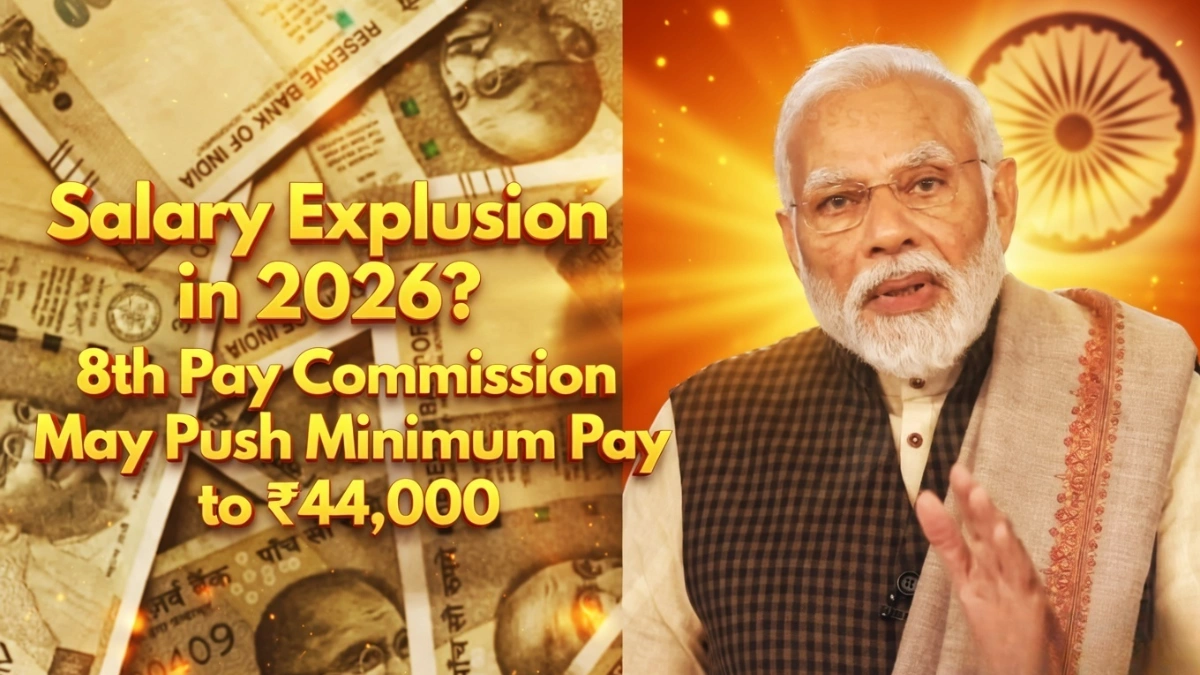
Government employees across India are closely watching the developments around the upcoming 8th Pay Commission. Recent discussions and reports suggest that the new pay commission could significantly increase the minimum salary of central government employees. If the proposed changes are implemented, the minimum basic salary could rise to around ₹44,000, representing a substantial increase compared to the current pay structure. This potential revision has created strong interest among millions of employees and pensioners who are hoping for a major financial boost.
What Is the 8th Pay Commission and Why It Matters
The Pay Commission is a government-appointed body responsible for reviewing and recommending changes to the salary structure of central government employees and pensioners. These commissions are usually formed every ten years to adjust wages according to inflation, economic conditions, and living standards. The current salary structure is based on the recommendations of the 7th Pay Commission, which was implemented in 2016. Over the years, rising inflation and increasing living costs have triggered discussions about the need for the 8th Pay Commission. If the new commission is approved and implemented around 2026, it could revise salary structures, allowances, and pension benefits for millions of employees across various departments.
Minimum Salary May Rise to ₹44,000
One of the most talked-about proposals related to the 8th Pay Commission is the expected increase in the minimum salary. Under the 7th Pay Commission, the minimum basic salary was set at ₹18,000 per month. According to various policy discussions and estimates, the 8th Pay Commission could increase this minimum salary significantly. Reports suggest the minimum pay may rise to around ₹44,000 per month depending on the final fitment factor decided by the government. Such a jump would represent a major financial upgrade for entry-level government employees and lower pay grade staff.
Expected Pay Hike of 30–34 Percent
Experts and employee unions believe the salary revision under the 8th Pay Commission could lead to a pay hike of around 30 percent to 34 percent. The exact increase will depend on several factors including inflation data, government finances, and the fitment factor used to calculate the revised pay.
The fitment factor plays a crucial role in determining the final salary. If the government decides to increase the fitment factor significantly, employees across different pay levels could see noticeable increases in their monthly salaries. This potential hike could improve the financial stability of millions of government employees who have been facing rising costs of housing, healthcare, and education.
Impact on Pensioners and Retired Employees
The 8th Pay Commission will not only affect current employees but also pensioners. Pension benefits are usually revised along with the new pay structure because pensions are linked to the last drawn salary. If the minimum salary increases to ₹44,000, pension calculations will also change, potentially increasing the income of retired government employees. This would provide significant financial support for pensioners who rely heavily on government pensions to manage their daily expenses. Higher pensions can also help retirees cope with increasing healthcare costs and living expenses.
When Could the 8th Pay Commission Be Implemented
While discussions around the 8th Pay Commission are gaining momentum, the government has not yet officially confirmed the formation or implementation date. However, based on the historical timeline of previous pay commissions, many experts believe the next revision could take place around 2026.
If the government forms the commission soon, it may take time for the panel to study salary structures, review economic conditions, and submit recommendations before final approval. Once approved, the new salary structure could benefit millions of central government employees across various ministries and departments.
Possible Benefits for Government Employees
If the proposed salary revision becomes reality, several benefits could follow for government employees. These include improved financial security, better purchasing power, and increased motivation among the workforce.
• Minimum basic salary may rise from ₹18,000 to around ₹44,000
• Estimated salary hike of 30 percent to 34 percent
• Pension benefits likely to increase for retired employees
• Improved financial stability for government staff
• Higher spending power for millions of families
Such changes could have a positive effect on employee morale and overall economic activity.
Broader Economic Impact of the Pay Revision
A major pay revision under the 8th Pay Commission could also influence the broader economy. When government employees receive higher salaries, their purchasing power increases. This can lead to higher spending in sectors such as housing, retail, automobiles, and consumer goods. Increased spending often boosts economic activity and supports businesses across multiple industries. However, the government will also need to balance fiscal responsibility with employee welfare while making decisions regarding the pay revision.
Conclusion
The possibility of the 8th Pay Commission increasing the minimum salary to ₹44,000 has generated significant excitement among central government employees and pensioners. If implemented with a 30 to 34 percent pay hike, the new salary structure could provide substantial financial relief and improved living standards. Although official confirmation is still awaited, the discussions surrounding the upcoming pay commission indicate that a major salary revision may be on the horizon. Millions of employees are now eagerly waiting for the government’s final decision.
Disclaimer: This article is based on ongoing discussions, reports, and expectations related to the 8th Pay Commission. Final decisions will depend on official government announcements.